Agent Farmbeta Join early access

District III of XThirteen things

Beyond code

Agents work as a production team and hand you finished media.

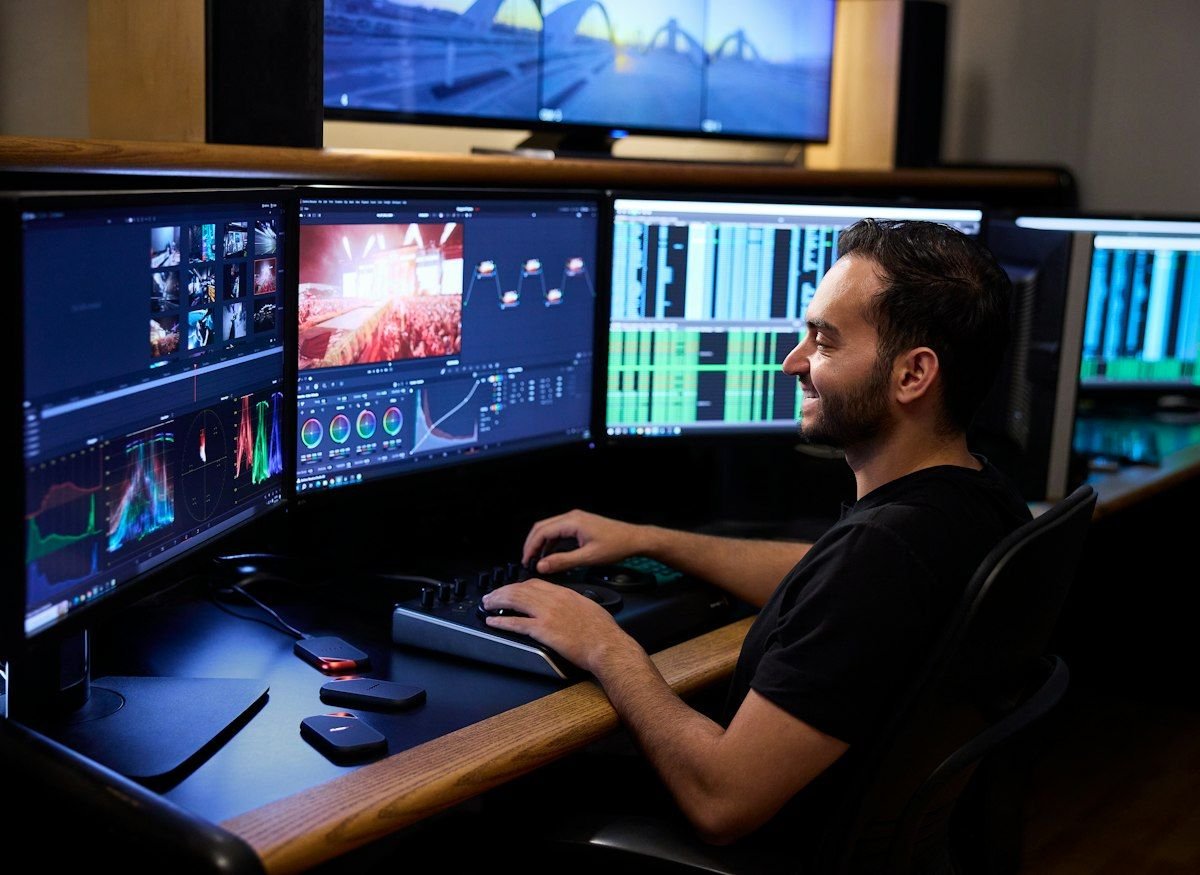
A colourist at a grading desk in front of four screens

Not all work is code. A video, a series of shorts or a week of posts is the same kind of long, many-step job, and agents can carry it the same way: an idea, a script, the shots, a judge that looks at every one, your keep or drop, and a sequence that opens in Premiere. You get the files, filed and described, not a chat about them.

09 Studio

A production · scene by scene · demo

Not only code. A film, made by agents.

Give the Studio a brief. Agents write the shots and a video model makes them. A vision model checks each one against your criteria, and a shot that fails is made again with the critique. You keep or drop; Premiere gets the sequence.

🎬 Studio

The last keeper · 3/6 scenes approved · $1.62 in 30 days

the production, scene by scene

ScreeningThe last keeper00:00 / 00:15

The sequence Premiere would get, playing. A demo film drawn on this page, frame by frame; in the app each shot comes from the model its step names, here a video model for every scene.

III·1

Studio

Agents work as a production team: idea, research, script, shots, edit, judgement. You get assets, not chat.

The Studio page, live

What it solves

A production has many parts: a list of scenes, a wall of generated files, an edit, the models and folders that feed them. When each lives in its own window, the thing you actually do, from a plan to a cut, exists nowhere as a whole.

How it works · pick a step

The old Open Media Gallery command still works: it opens the Studio on its Assets tab, which is what the gallery became.

III·1Five tabs1 / 5
III·2

Content recipes

Long video to shorts, a weekly channel rhythm, a video edited in parts: install one and run it.

Install a recipe, live

What it solves

A content workflow is many steps, and building one from a blank page is where most people stop. Tie it to named agents and it breaks the day you rename one.

How it works · pick a step

Three quick one-agent recipes come too: text to image, text to image to video, and audio to text with Whisper. No recipe pins a judge or supervisor model, so the cost preset you run with decides them.

Settings · 1
SettingDefaultWhat it does
agentFarm.showrunneryoutuberThe agent that takes every role a workflow leaves open.
III·2One pick1 / 5
III·3

Any media model

Images, video and voice from any fal.ai or Replicate model, a file on your computer uploaded once you agree, and every job priced by your rules under a monthly media budget.

Sources and costs, live

What it solves

The best image or video model changes every few months, and each lives behind its own site and its own API. A tool that wires in one is out of date by the time you learn it.

How it works · pick a step

The prices that ship are placeholders: check them against your provider's price page. Without a key the step does not run, and says which key it needs.

Settings · 4
SettingDefaultWhat it does
agentFarm.mediaAuthSecretFAL_KEYThe name of the vault secret that holds the fal.ai key.
agentFarm.replicateAuthSecretREPLICATE_API_TOKENThe name of the vault secret that holds the Replicate key.
agentFarm.mediaPricinga tableYour price rules per model, per image, second or request.
agentFarm.mediaBudgetMonthUSD0 (off)The 30-day media spend that raises a warning, once a month.
III·3The model id1 / 5
III·4

Cut on your machine

Ten FFmpeg recipes split, join, reframe, subtitle and level video and sound on this machine, as a workflow step with no model and no tokens.

What it solves

Half of video work is cutting, joining, reframing and levelling, and none of it needs a model. Paying an agent to write an FFmpeg command, and trusting the command it wrote, is the slow and risky way to do it.

How it works · pick a step

Settings · 1
SettingDefaultWhat it does
tool.outDiraf-tool, beside the inputWhere a recipe writes. Whether it may overwrite a file, or adds a suffix, is a setting too.
III·4Ten recipes1 / 5
III·5

Judge and triage

Give a step its criteria and a vision model checks every shot; a FAIL is made again with the critique. You keep or drop the rest in Triage.

Triage, live

What it solves

A video model is wrong often enough that someone has to look at every shot. If that someone is you, the agents are only as fast as your evenings.

How it works · pick a step

If the judge cannot run, the shot is let through and marked unjudged rather than blocking the line. Checks start on a cheap model and only a FAIL climbs to a stronger one: see the judge ladder in Measured, not claimed.

Settings · 1
SettingDefaultWhat it does
agentFarm.judgeCompareautoauto shows the judge the source beside an edit; never judges the result alone.
III·5The criteria1 / 5
III·6

Brand kit

Style, colours, type, voice, the logo rule and recurring characters, kept once per production; every step that asks for them gets the same ones.

The brand kit in Sources

What it solves

A series looks like a series because the same colours, type, voice and faces come back every time. Typed again into every prompt, they drift by the third episode.

How it works · pick a step

III·6One kit1 / 5
III·7

Five stages

Every file a run makes is filed by stage, from source to asset, with a record of what made it and what it was made from; a model fills in what it shows.

The Assets wall, live

What it solves

A month of generating leaves thousands of files named like <code>output_0412.mp4</code>. Which one was the good take, which prompt made it, and what it was cut from is gone by the next week.

How it works · pick a step

If the database is not running, the file is filed anyway and its record waits until it answers. Files made before the library existed can be brought in once; it shows what it would do before it does it.

Settings · 1
SettingDefaultWhat it does
agentFarm.studioLibraryPromoteasks firstSet to auto and a promotion moves the file at once.
III·7Five stages1 / 5
III·8

Airtable engine

A local database of media records and knowledge that agents search, save to and update through ten tools; a run can take its material from it.

Records on the Assets wall

What it solves

Records of what was made are only useful if agents can read and write them as easily as you can. A database only a person can open turns every agent into someone asking you to look something up.

How it works · pick a step

Until you add your engine's folder, the tools explain what to do instead of failing. A change on the page reaches running agents on their next call, with no restart.

III·8Its own page1 / 5
III·9

Media inbox

Drop files in a folder. Agents look at each one, file it by stage and fill in its card; anything unsure is asked, not guessed.

The waiting area in Sources

What it solves

Not everything comes from a workflow: a clip downloaded by hand, a phone's photos, an export from your editor. Sorting them is the job everyone postpones, and the unsorted pile is where good material is lost.

How it works · pick a step

Settings · 3
SettingDefaultWhat it does
agentFarm.allInWhendailyGo through the waiting area with the daily media batch, or only when you ask.
agentFarm.allInUnsureaskAsk about the files the model was unsure of, or leave them for the next pass.
agentFarm.ingestFolders[]Folders scanned for new media, each optionally tied to a production and scene.
III·9The waiting area1 / 5
III·10

Straight to Premiere

The scenes become a sequence. Export it as XML and EDL, import it into Adobe Premiere and finish by hand.

Assemble and export, live

What it solves

Agents can make the shots, but the final cut is a craft and a person's taste. A folder of clips with no order leaves you rebuilding the plan by hand before the real editing starts.

How it works · pick a step

An agent can export too, the XML, the EDL or both; only files assigned to a scene are placed.

III·10The sequence1 / 5
III·11

Content calendar

What gets made lands on a calendar in your vault. Once you approve, the publish step hands it to your own upload flow.

The calendar and a publish, live

What it solves

A content plan in a spreadsheet nobody opens, and uploads done by hand at midnight, is how a weekly channel becomes a monthly one. An agent that uploads on its own is worse: one bad post is public before you see it.

How it works · pick a step

Settings · 2
SettingDefaultWhat it does
agentFarm.contentCalendarDir${vault}/01_INBOX/02_Calendar/CONTENTThe vault folder that holds one note per publish.
agentFarm.publishApprovalaskAsk before every publish, send on its own, or never send and only rehearse.
III·11A note per publish1 / 5
III·12

What worked

Views, watch time and engagement come back from your own analytics flow onto each published piece, and the next idea is written knowing what worked.

What it solves

The numbers live on the platforms and the ideas live in your head, and the two rarely meet. A channel that never looks back makes the same video that did not work, again.

How it works · pick a step

Which numbers are asked for is yours to choose, and a step can ask for its own. Switch the summary off and the prompts and the brief simply go without it.

III·12Asked for1 / 5
III·13

Spoken briefing

The daily digest read aloud: by this computer for free, or by a voice model you choose.

The spoken briefing, live

What it solves

At the end of the day you want to know what the farm did, but not by opening four pages. Sometimes your eyes are on something else entirely.

How it works · pick a step

Settings · 3
SettingDefaultWhat it does
agentFarm.dailyDigestoffThe time the daily digest card is sent, such as 21:30.
agentFarm.digestTtsModelemptyThe fal.ai voice model that reads the briefing into an mp3.
agentFarm.digestTtsFolderemptyWhere the mp3 goes; empty uses the report folder.
III·13The digest1 / 4

Questions

Does Agent Farm make the images and videos itself?

No. It runs no model of its own: a media step calls the fal.ai or Replicate model you name, on your own key, and Agent Farm downloads, judges, files and assembles what comes back.

What does a production cost?

What your providers charge for the models you pick, and nothing more from us. Each job is priced by your rules and shown beside your text spend, a monthly media budget warns when you pass it, and the FFmpeg cuts on your machine cost nothing.

Do I need Adobe Premiere?

No. Premiere opens the XML directly, and the EDL beside it is a standard any editor reads. You can also just take the files from their stage folders.

Will it post to my channels without asking?

Not unless you tell it to. A publish waits for your yes by default, can be set to only rehearse, and goes out through your own upload flow; Agent Farm holds no platform password.

Can I use clips I made somewhere else?

Yes. Drop them in the waiting area to be looked at and filed, or in a watched folder to be registered where they are. They can be judged, kept, placed in a scene and exported like anything an agent made.

Is this a real part of the product or a side demo?

It is a real part. The whole chain, from a video split into parts, each edited and judged, to the parts joined over the original sound and filed as final, was run end to end with no copy and paste before it was called done.